Buying safely · · 9 min read
Real or Fake Decants: What You Can Actually Check
A decant has no box and no batch code stamped on the glass, so the thing you check is not the bottle but the seller. How to work out a price floor, the signals worth slowing down for, and what your nose can tell you.
We get asked this more than any other question, and it is the right question to ask: "How do I know this decant is the real thing?"
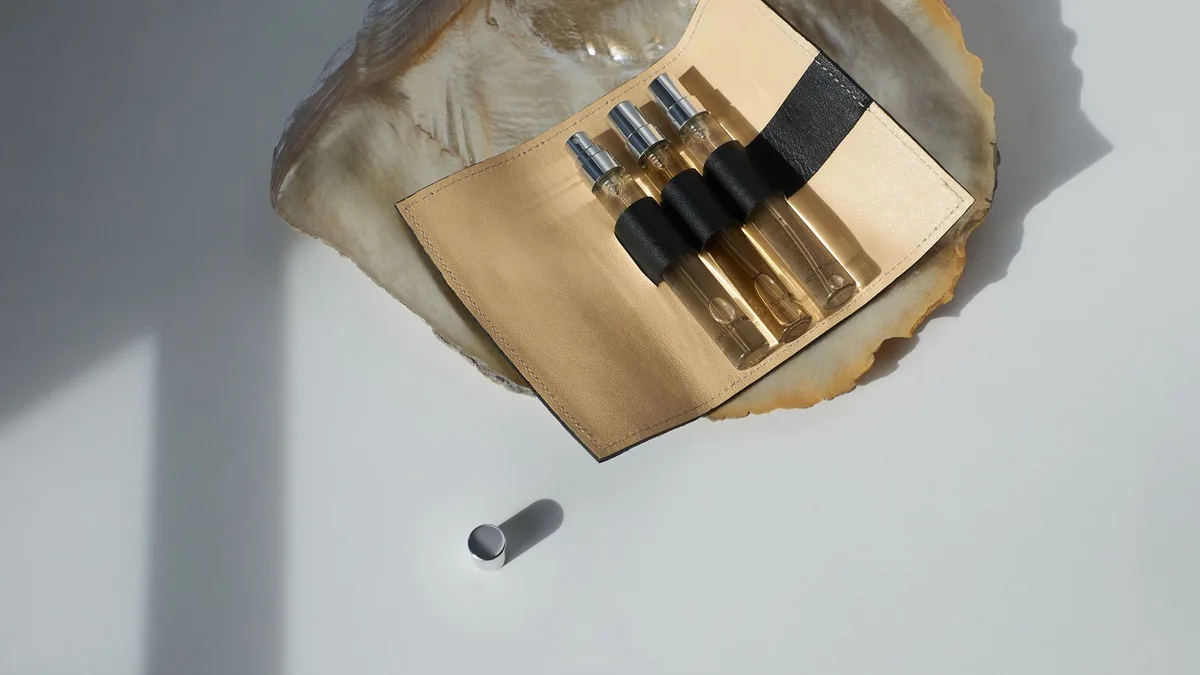
The worry is well founded, because a decant is the hardest format on the market to verify. Buy a full bottle and you have the box, the cellophane, the batch code stamped into the glass, the serial on the base, the typeface on the label, even the weight of the bottle in your hand. Buy nước hoa chiết and every one of those stays behind on the source bottle, in the seller's home. What reaches you is a 5 or 10 ml glass vial with an atomiser and a label the seller printed themselves.
So this article will not teach you to examine a decant and tell real from fake, because guides written that way point you at the wrong object. The thing you can check is not the bottle. It is the seller. What follows applies to anyone, on any platform, including sellers who are not us.
Why a decant is a trust purchase
Set out the authentication signals people pass around:
- A crisply printed box, a barcode that scans, cellophane wrapped tight and cut cleanly
- A batch code stamped on the bottle and printed on the box, the two matching
- A serial or a stamp on the base of the bottle
- The quality of the atomiser, the weight of the glass, the mould seams, the typeface on the label
That entire list lives on the full bottle. Not one item on it travels with the liquid poured into a 5 ml vial. A decant vial is a plain industrial vial anyone can buy, the label is something anyone can print, and the liquid looks the same either way.
Which means two sellers, one pouring from a genuine bottle and one pouring from a counterfeit, can send you two parcels that look identical. That is not an argument against decants. Decanting is a sensible way to buy, especially when you want to live with an expensive scent before committing to a bottle. It simply moves the burden of verification somewhere else, and if you do not know where, you are inspecting the wrong thing.
The right question: what can this seller publish?
When you cannot inspect the bottle, what is left to inspect is information. A serious seller can tell you the following without being chased for it, and can tell you the first time you ask rather than the third.
- Which bottle it came from. Full name, concentration (EDT, EDP or Parfum), and the size of the source bottle. "Dior Sauvage" is not yet an answer, because Sauvage exists as an EDT, an EDP and a Parfum, and those are three different scents. "Dior Sauvage EDP, 100 ml bottle" is an answer. Bleu de Chanel is the same story.
- The batch code of that source bottle. This is the most useful thing most sellers do not offer. A batch code is the string a manufacturer stamps on a bottle to identify the production run. A seller can photograph it, and you can run it through the public batch code checkers to see whether it has the right shape for that house. It does not prove the bottle is genuine, since a good counterfeit can carry a plausible-looking code, but it proves the seller has a specific physical bottle and will let you look at it.
- The ingredient list. Cosmetics have a standardised naming system called INCI, used on ingredient lists so that someone with a sensitivity can recognise what they need to avoid. A seller who can copy that list across from the source bottle's carton is a seller who has the carton. An INCI name says nothing about whether an ingredient is approved or safe, it is only a consistent way of naming it.
- The actual volume, in millilitres. "Mini", "travel size" and "decant" are not volumes. 5 ml and 10 ml are volumes.
- A decant date or an expiry date. A small vial carries a higher ratio of air to liquid than a full bottle, so knowing when it was poured is useful information rather than paperwork.
- What the vial itself is. Glass or plastic, what kind of atomiser, whether it is rated for high-strength alcohol. Cheap plastic in long contact with alcohol can pick up an off note, and a sticky atomiser ruins a perfectly good fragrance.
Nobody is obliged to publish all six. But a seller who answers five easily and one who deflects all six represent very different levels of risk, and that difference is measurable before you send any money.
You are not buying a vial. You are buying one person's assurance that what is in it is what they say it is. Judge that assurance the way you would judge any other promise: by how specific it is, and by whether the person making it will put it in writing.
Signals worth slowing down for
None of these proves anything on its own. Two or three of them together is a reason to pause.
- A price below the cost of the liquid alone. The next section shows how to work that number out. It is the clearest signal there is, because it is arithmetic rather than instinct.
- No stated size, or a vague one. With no volume you cannot calculate a price per millilitre, and without that you cannot compare this seller against any other. The vagueness is usually deliberate.
- Only the brand's own product photography. Press images are available to everyone. A photo of the actual source bottle on the seller's table, with the filled vials beside it, is much harder to fake.
- A dodge when you ask about the batch. "We only sell genuine stock" is not a batch code. A seller holding a real bottle finds the question ordinary.
- "Tester" used as a synonym for cheap. A tester is the version a brand supplies to shops, usually the same liquid in minimal packaging, and it has a real reason to cost less. When the word is used to explain away a price that makes no sense, it is covering for something else.
- Flat certainty about something nobody can be certain of, such as "verified genuine, 100 per cent guaranteed". Ask who verified it and how. A guarantee that cannot name the party behind it is a sentence, not a guarantee.
The price check: finding the floor yourself
This is the most useful tool here, because you can apply it to any seller without taking anyone's word for anything. A decant cannot cost less than the liquid inside it. The arithmetic:
Price per millilitre = price of the full bottle ÷ size of the full bottle in millilitres
Floor price of the decant = price per millilitre × the millilitres you are buying + the vial, the label, the labour and the postage
Look up the full bottle price yourself, somewhere you trust: the brand's own site, or a large cosmetics retailer you know by name. Divide by the bottle size, multiply by 5 or 10, then add vial, label, pouring time, packaging and postage.
Three things to understand about using this:
- A decant costing more per millilitre than the full bottle is normal, not a rip-off. The seller pays for the whole bottle up front, carries the risk of not selling the rest, and pays for vials and their own time.
- A price below the floor needs an explanation. There are good ones: a deep sale, a bottle bought abroad, a bundle. If the seller offers one, fine. If none is offered and the price is still below the cost of the liquid, something does not add up, and you do not yet know which part.
- Cheap does not mean fake. This is where people most often go wrong. Some bottles are simply inexpensive to begin with. Lattafa Khamrah is a good example: the full bottle costs far less than a niche release, so a cheap 10 ml decant of it is exactly right. Creed Aventus, by contrast, is one of the most widely counterfeited fragrances in the world, so a 10 ml Aventus decant priced like a Khamrah decant is the number worth asking about. A price only means something next to the specific bottle it was poured from.
What your nose can and cannot tell you
This is the part we would rather say honestly, even though it is less convenient.
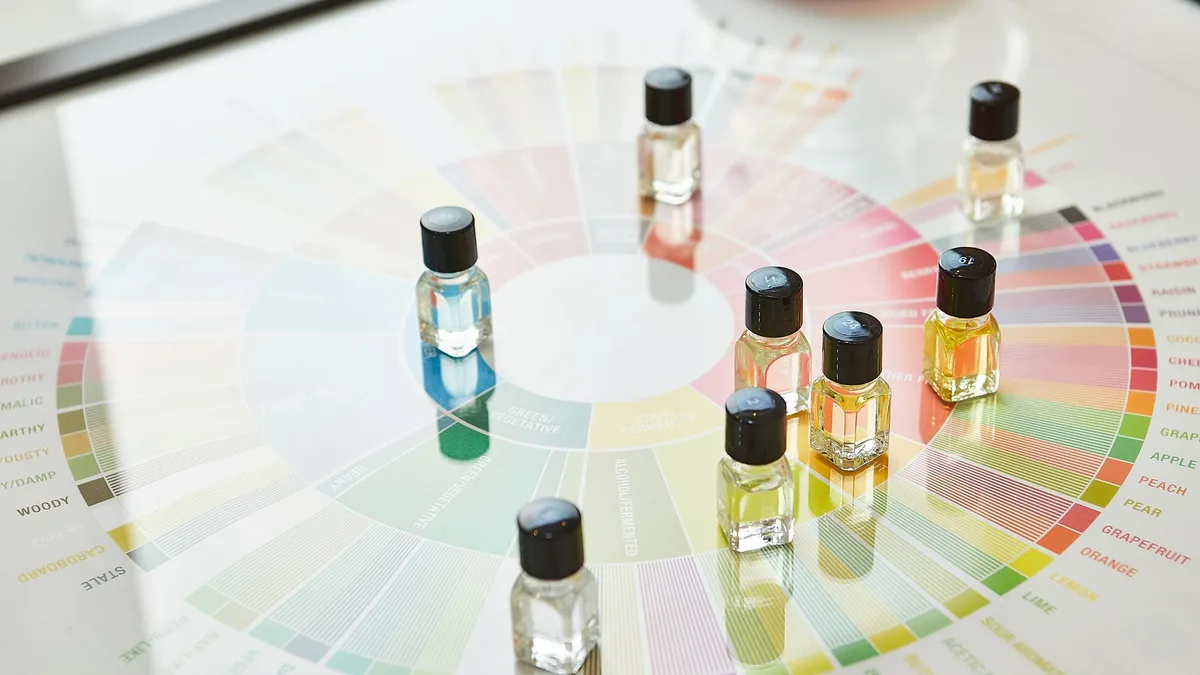
A well-made clone can fool a casual nose for the first ten minutes. The opening is the easiest part to copy, because those are light, fast-evaporating molecules, often citrus or fresh spice, which synthetics reproduce closely. If you spray, nod and decide it smells right on the spot, you have not tested much.
The difference shows up in the second half. A fragrance divides into top, middle and base notes precisely because different groups of molecules evaporate at different rates. Clones tend to build the opening carefully and then run out of material: after an hour or two the scent collapses into a generic sweetness, turns sharp and alcoholic, or simply disappears while the original would still be on your skin into the evening. Longevity and the drydown are the hardest things to fake, and the two things you only learn after several hours.
So the way to test is: spray one wrist, get on with your day, then smell it again at one hour, three hours and six hours. Comparing against the original tried at a counter helps, but scent memory is less reliable than you think.
And if you have never smelled the original, your nose cannot really conclude anything. At that point you are back to what the seller can tell you.
Sensitive skin, and why to patch test
Counterfeit fragrance is an irritation risk for the simple reason that you do not know what is in it. Counterfeit goods in general are described as being of lower quality and as potentially carrying health and safety risks, and with cosmetics the reactions most often mentioned are irritation and allergy.
That is not the same as saying genuine fragrance is automatically fine for everyone. DermNet describes fragrance allergy as a fairly common form of allergic contact dermatitis, affecting around 1 per cent of adults, which develops once a person has become sensitised, so it can appear with a bottle you have worn happily for years. It usually shows up as itchy, scaly, red patches on the neck, face or hands.
The handling is the same in either case:
- Put a little on the inner forearm rather than the neck, and watch it over a day or two before wearing it regularly
- Apply to clean, dry, unbroken skin, not to anywhere already sore
- If you get redness, itching or stinging, wash with water and a gentle soap and stop using it
- If a reaction persists or spreads, see a dermatologist, since identifying the allergen takes patch testing rather than guesswork
None of this is meant to alarm anyone. The practical point is that a 5 ml vial is a convenient way to try something on your skin, more so than a 100 ml bottle you have already paid for.
Buying one small decant is itself the test
In Vietnam most chiết lẻ trade happens on Shopee, TikTok Shop and Facebook, which gives you one more layer of information than many markets do: the seller's history.
Read it like a file. How long the shop has been trading. Whether the reviews carry real customer photographs or rows of empty five stars. How the seller answers public questions about batch codes and dates, particularly the awkward ones. Whether they sell fragrance, or fragrance today and phone cases tomorrow. A seller who has been around for years and answers hard questions properly is a form of evidence, if not a conclusive one.
Then the last step, and the cheapest: order a single 5 ml first. Buying one small decant tests nearly everything at once. Is the volume what was stated. Does the label carry what they promised. Does the vial seal, and does the atomiser mist or squirt. Does the scent hold at six hours. How was it packed, and how fast did it arrive. If all of that checks out, order the 10 ml next time with some basis for it. If something does not, you are out a very small amount of money and you have learned something worth knowing.
What we do, and what we do not
Worth stating plainly, so you can hold us to the same standard as everyone else.
For each decant, Vialdee publishes the batch code of the source bottle, the ingredient list under INCI names, the actual volume in millilitres, and an expiry date. We pour from full bottles and record which bottle produced which batch of decants.
That is transparency, not certification, and the two are not the same thing. We are not inspected, certified or authorised by any authority, and we do not claim to be an official retailer for any brand. What we offer is checkable information so you can form your own view, not a stamp from a third party. If anyone tells you they hold such a stamp, ask which one and who issued it.
Apply the standard in this article to everybody, us included. A market where buyers know to ask for a batch code, work out a price floor and try one small vial first is a better market for every honest seller in it, including the ones who are not us.
Sources
- Fragrance allergy · DermNet
- Counterfeit consumer good · Wikipedia
- International Nomenclature of Cosmetic Ingredients · Wikipedia
- Note (perfumery) · Wikipedia
Written by The Vialdee team