Wearing and storing · · 7 min read
Long-Lasting Perfume: 7 Spray Points That Work
Long-lasting perfume comes down to spraying the right spots and prepping your skin. Here are 7 spray points that genuinely work in Vietnam's heat, humidity and daily motorbike ride.
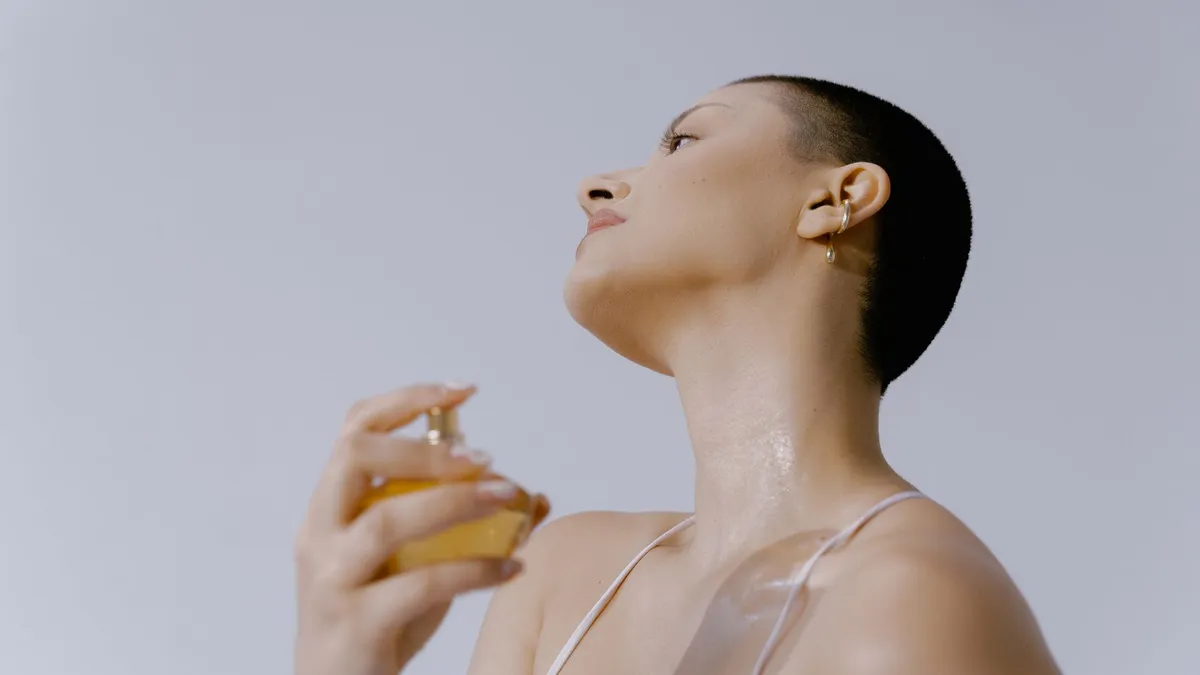
The question we hear most often from perfume buyers in Vietnam is "why does it disappear so quickly?" Many people try to fix it by spraying ten pumps or more. The result is that everyone around them is overwhelmed, while they still cannot smell a thing themselves, because our noses grow accustomed to our own scent remarkably fast.
The truth is that longevity does not depend mainly on the number of pumps. It depends on where the fragrance sits, whether that patch of skin is dry or hydrated, how warm the area is, and what you brush up against over the course of the day. This article goes into the practical detail of spray points for city life here, the kind where you ride twenty minutes through morning traffic and then sit in air conditioning until six.
Why spray points matter more than the number of pumps
Scent molecules need warmth in order to evaporate gradually. Areas that run warmer than the rest of the body, such as the inner elbows, the neck and behind the ears, act like a gentle warming plate, releasing the fragrance little by little throughout the day. By contrast, if you spray onto very dry skin, or somewhere cool with poor air circulation, the scent usually finishes sooner than it should.
Another thing people overlook is that the climate here is not one climate. In Ho Chi Minh City, where the thermometer sits between 30 and 35°C most of the year, hot and humid air speeds up the evaporation of top notes. The citrus and mint that smell so fresh at first vanish noticeably faster than they would in a cold place. What stays behind are the heavier base notes such as sandalwood, amber, vanilla and musk, so if you want longevity, choose spray points that help hold on to those base notes rather than scattering the fragrance all over your body.
Hanoi in winter is a different problem entirely. At 10 to 15°C there is not enough warmth to lift much of anything, and a fragrance that felt loud in August can seem to project almost nothing in January. That is the one situation where a more generous hand is genuinely justified, along with spray points that sit close to body heat rather than out on exposed skin. Then comes the nồm ẩm spring, when the walls sweat and the air will not dry anything: scent tends to hang around you in a close cloud rather than travelling, which is worth knowing before you add a fourth pump.
Three well-chosen spray points on skin that has been moisturised usually outperform eight pumps on dry skin.
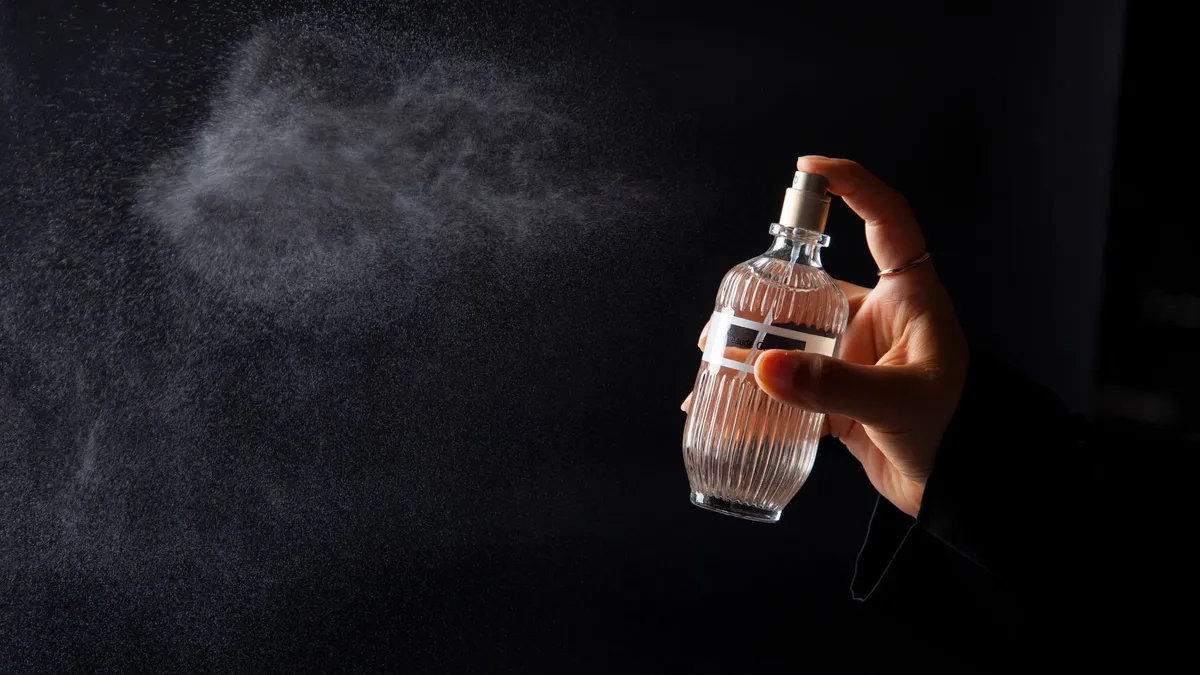
What the motorbike does to your perfume
For most readers this is the part that matters most, because most of us are on a xe máy every morning, and the ride decides which spray points still exist by the time you arrive.
Think about what you are actually wearing on the bike. The helmet strap runs under your chin and across the sides of your neck. A face mask covers the lower half of the same area. The sleeves of your áo chống nắng cover your wrists and forearms completely. Between them, almost every classic spray point is either pressed under fabric, rubbing against a strap, or sitting in the one place that sweats hardest for the whole journey.
So, in practice:
- Behind the ears and the neck take the worst of it. A strap rubs scent off skin the same way a sleeve does, and the heat under a helmet means you arrive damp. If these are your favourite points, spray them after you park, not before you leave.
- The wrists and inner elbows are under sleeves for the entire ride. This is not all bad, because covered skin loses less to the wind, but it does mean whatever you sprayed there is now partly on the jacket.
- The chest under a single layer is the point that survives the journey best. It is shielded from the wind, held at body temperature, and nothing rubs against it. If you only get one spray point right before a ride, make it this one.
- The nape of the neck sits right where the wind comes through, under the back of the helmet. On a short ride it is fine. On a long one at speed, expect it to be the first point to go.
Wind, sun and sweat all work in the same direction: they take the top notes early and leave you with the base. That is the strongest argument for keeping a 10 ml decant in your bag. One pump on arrival, on skin that has cooled down and dried off, does more than four pumps at home ever will.
The other end of the ride sets its own limit. Air-conditioned offices concentrate everything, desks are close together, and a shared lift puts your fragrance directly under someone else's nose for thirty seconds. Whatever you have decided about longevity, the honest ceiling for a workday is two pumps, three at the very most.
7 spray points that genuinely work
1. The inner elbow
This is the spot we think is most underused. The skin is thin and warm, and it is in constant motion, so the scent is released in waves. Another advantage is that when you reach up for the handrail on a crowded bus, the scent drifts up just enough rather than firing straight into the face of the person next to you.
2. Behind and just below the ears
Warm, and close to nose level for whoever you are talking to. Ideal for fragrances you want people to notice as they come closer, such as Le Labo Santal 33 or Tom Ford Oud Wood. Be careful not to spray until the area is wet, though, because it perspires easily and some people's skin here is more sensitive than elsewhere. It is also the point most affected by a helmet strap, so save it for after you arrive.
3. The base of the neck at the collarbone
A classic position: warm enough, and it sits beneath a collared shirt, so the scent is not blown away quickly by the air conditioning. When you move or take off a jacket, the fragrance gradually rises.
4. The chest, under a single layer of clothing
Spray onto the skin before you dress, then let it dry for about 30 seconds. This way the fabric holds the scent in an extra layer. It suits days spent in air conditioning for hours on end, when you do not want the fragrance to be too strong at close range, and it is the one point that comes through a motorbike ride intact.
5. The nape of the neck
This one is great for people with short hair or hair tied back. As you walk past, you leave a trail of scent, which is what many people call sillage. With fresher fragrances such as Bleu de Chanel Eau de Parfum or Acqua di Parma Colonia, this spot keeps the scent from dying too soon. Just remember it is also the point most exposed to the wind on the bike.
6. Behind the knees
It sounds odd, but it genuinely works if you are wearing a skirt or lightweight trousers, because body heat keeps pushing the scent upwards. Ideal for evening events or weddings where you are on your feet and moving around.
7. The ends of your hair, or a comb sprayed in advance
Hair holds fragrance extremely well, but the alcohol in perfume can dry it out. The safer route is to spray a comb or brush and run it lightly through your hair. Never spray directly onto the scalp. On a helmet day, do this after the helmet comes off.
Spots to avoid, and common mistakes
- Rubbing your wrists after spraying. Rubbing distorts the opening notes and makes them finish faster. Spray and leave it alone.
- Spraying the underarms or any area that perspires heavily. Sweat mixed with perfume is rarely pleasant for anyone, and the skin here is easily irritated.
- Spraying over a strongly scented body lotion. The two scents will clash. If you want to moisturise, use an unscented product.
- Spraying onto silk, pale fabrics or a newly bought outfit for a wedding. Perfume can leave marks, so spray your skin before you get dressed.
- Spraying near jewellery. Pearls and some plated silver can be damaged by alcohol.
If your skin is normally dry, which is common among people who sit in heavily air-conditioned rooms all day, apply a thin layer of unscented lotion to your spray points first. That hydration gives the scent molecules something to cling to. The difference is usually obvious, especially with concentrated fragrances such as Baccarat Rouge 540 Extrait, which lasts noticeably longer when it has prepared skin to work with.
Matching spray points to fragrance type and occasion
Not every scent should be applied in the same way. Here is an approach that works in almost every case.
- Citrus and aquatic fragrances such as Giorgio Armani Acqua di Gio Profumo and Issey Miyake L'Eau d'Issey Pour Homme: spray the nape of the neck and the chest, 3-4 pumps, because the top notes fade fast and need fabric to help hold them.
- Woody and oud fragrances such as Tom Ford Oud Wood and Initio Oud for Greatness: go very light, 1-2 pumps on the inner elbows and behind the ears. This family is already potent and long-lasting on its own.
- Sweet gourmand fragrances such as Lattafa Khamrah and Kilian Angels' Share: best for evenings. Spray the neck and under your clothing, and avoid multiple spray points on hot days, because the sweetness will build up.
- Heading to the office: one pump on the chest before you dress, then carry a 10 ml decant and add a single pump to the inner elbow once you have parked and cooled down.
- Weddings and parties: after showering, spray three points on moisturised skin - the neck, the inner elbows and behind the knees.
- A cold Hanoi morning: the same points, but a pump more than you would use in summer, and keep them under a layer rather than out in the open.

Trying before buying a full bottle is the most economical route
Longevity is deeply individual. Oily skin, dry skin and the temperatures you actually spend your day in mean the same fragrance might last a few hours on one person and all day on another. Reading overseas reviews and taking them at face value often leads to disappointment, because the reviewer is usually describing a cool, dry day. For that matter, a review written during a Hanoi winter will not describe your July in Saigon either.
The most cost-effective approach is to test properly with a 5 or 10 ml size, using it consistently for one to two weeks. Make a note of which spot lasts longest on your skin, how much survives the ride in, how many pumps feel right in a cramped lift, and whether the scent suits your working day or your evenings better. Once you know the answers, buying a full bottle stops being a gamble.
Finally, store your bottles properly. Do not leave them under the seat of the bike or on a shelf in the bathroom, as heat and humidity degrade a fragrance quickly and reduce its longevity. Keep it in its original box, in the dark, at normal room temperature, and the scent you love will still smell the same many months from now.
Sources
- Olfactory fatigue · Wikipedia
- Fragrance of your perfume - Chemistry in Daily Life · Hong Kong Baptist University, Department of Chemistry
- Eau de toilette · Wikipedia
- Shelf Life and Expiration Dating of Cosmetics · US FDA
- Fragrance allergy · DermNet
Written by The Vialdee team